*12 Special Guest: Novità alla XII Fiera “Più Libri, più liberi”

4 dicembre 2013 

Dal 5 all’8 dicembre si terrà a Roma, presso il Palazzo dei Congressi (sito in piazzale Kennedy, 1), la XII edizione di “Più libri, più liberi”, fiera nazionale della piccola e media editoria.
Come ogni anno le novità saranno tantissime e i moltissimi visitatori avranno di certo di che rallegrarsi. Tuttavia durante questa edizione, a differenza delle precedenti, ci sarà una novità che attirerà sicuramente l’attenzione di tutti.

Infatti quest’anno, per la priva volta in Italia, sarà presente (STAND A 24 – FUIS) l’associazione NBA – No Brand Art, che raggruppa 23 narratori, poeti, saggisti, redattori, traduttori e promotori, che hanno deciso di promuovere un’arte concentrata sui contenuti e sull’autonomia, attraverso l’auto-pubblicazione e l’autopromozione.

L’intento è quello di incontrare i lettori e portare la propria esperienza di self-publishing e, per chi pubblica con casa editrice, di autopromozione in un contesto professionale

Ma che cosa è l’auto-pubblicazione?

Il self-publishing permette di accedere alla pubblicazione gestendone direttamente tutte le fasi con l’ausilio di professionisti e di integrare con la propria attività di promozione quella offerta dall’editoria tradizionale. A questo si aggiunge l’opportunità di accedere, attraverso la traduzione, a mercati potenzialmente sconfinati grazie ai canali di vendita online.

Un nuovo circuito insomma, che promette interessanti risvolti e prospettive soprattutto per gli autori emergenti.

Non solo, Attraverso auto-pubblicazione e autopromozione gli autori possono sperimentare nuovi modi di fare editoria, nuovi generi e formati di pubblicazione (libri interattivi, e-book ecc.), così da poter rispondere sempre di più alle crescenti esigenze del lettore.

I lettori in cerca di nuovi talenti da scoprire troveranno, nelle opere degli autori indipendenti di qualità, un ricco bacino di libri originali, facilmente reperibili e dei generi più vari.

Un appuntamento da non perdere, durante i giorni della fiera, sarà senza dubbio la conferenza “Gli autori indipendenti, il self-publishing e le nuove frontiere dell’editoria”, dove si tratterà di questo e di altre problematiche dell’auto-pubblicazione e dell’autopromozione, che si terrà allo stand A24 sabato 7 dicembre alle ore 16 in collaborazione con FUIS.

Per contatti e informazioni:

Cetta De Luca, sedcetta@gmail.com, tel. 327 6829997

Serena Zonca, serena.zonca@tiscali.it, tel. 347 0583598
* 11 Special Guest: An interview about my most humble servant, but more energetic the poem: sharing.

December 1, 2013

I quote here the textual comment made ​​to me by the interview “John Garufi Draft” and the link to the interview itself, it is also registered in his blog, where we talk about my two books of poetry and biography of each, and that is also a common feature in the work: sharing.  

My radio interview with Lino Milita, author of “Mutual rebirth” and “Suspended dreams“.

November 30, 2013 by “Giovanni Garufi Bozza”

Dear Visitor,

Today I’ll introduce you to the poetry of Lino Milita, author of two anthologies almost twins, leave a few months away from each other, “Mutual rebirths” and “Suspended dreams”.

They have in common, in addition to the skill of Lino, the property of being collected varied, combining different types of art, poetry, photography, painting. They are selfpublished. It is commendable the graphics capability of Lino, who personally supervised the editing and the alternation of poetry and visual art. The fact anthologies appear hymns art and cooperation between artists, the pure, made a careful study and closer ties, which make these vital and rich texts. Note on the price. With 12 € you can buy two books of art, photography, poetry. Books varied, well-set graphically.

You’ll wonder if you are the poems that inspired the works or the reverse, but you will not find a clear answer: Lino dragged and you are done drag, he has inspired and was inspired by involving artists from different parts of Europe.

I hope in the assembly of the interview he had given no idea of what you’ll find in anthologies, adjusting sounds, voice and images into a single video. For sure, you will find valuable encouragement in what Lino says, because he only writes poetry, studying the savoring, it follows the history, origins. There is a precious knowledge, which has enriched me so much.

To listen to the interview click HERE

*11 Special Guest: Una mia intervista sull’ancella più umile, ma più energica della poesia: la condivisione

1 dicembre 2013

Riporto qui testuale il commento all’intervista fattami da Giovanni Garufi Bozza e il link all’intervista medesima, registrata anche nel suo blog, dove parliamo dei miei due libri, di poesia e della biografia di ognuno e che tratta anche di un tratto comune nel lavoro svolto: la condivisione.

La mia radiointervista a Lino Milita, autore di “Reciproche rinascite” e “Sogni sospesi”.

November 30, 2013 by Giovanni Garufi Bozza

Caro Visitatore,

oggi ti presento la poesia di Lino Milita, autore di due sillogi quasi gemelle, uscite a pochi mesi di distanza l’una dall’altra, Reciproche rinascite e Sogni sospesi

Esse hanno in comune, oltre alla bravura di Lino, la proprietà di essere raccolte multiformi, che uniscono diversi tipi di arte, poetica, fotografica, pittorica. Autopubblicate entrambe, è lodevole la capacità grafica di Milita, che ha curato personalmente l’editing e l’alternanza di poesia e arte visiva. Le sillogi appaiono infatti inni all’arte e alla cooperazione tra artisti, quella pura, fatta di un attento studio e intreccio di legami, che rendono questi testi ricchi e vitali.
Nota di merito, il prezzo. Con 12 euro si possono acquistare due libri di arte, di fotografia, di poesia. Libri multiformi, ben impostati graficamente.

Ti chiederai se sono le poesie ad aver ispirato le opere o viceversa, ma non troverai una risposta univoca, Lino ha trascinato e si è fatto trascinare, ha ispirato e si è lasciato ispirare, coinvolgendo artisti da diverse parti d’Europa.

Spero nel montaggio dell’intervista di aver dato idea di ciò che troverete nelle sillogi, adeguando suoni, voce e immagini in un unico video. Di sicuro, troverai dei preziosi stimoli in ciò che Lino dirà, perché lui non scrive unicamente poesia, la studia, l’assapora, ne segue la storia, le origini. C’è un sapere prezioso, che mi ha arricchito tanto.

Da ultimo, ti daremo una bella news, invitandoti con il progetto No Brand Art alla Fiera del Libro di Roma. Presso lo stand della FUIS (l’A24) troverai me, Lino Milita, Cetta De Luca, Ivonne Boscaino (tanto per citare alcuni che puoi ritrovare su Radiovortice.it) e tanti altri autori indipendenti. Per la prima volta in Italia, un gruppo di autori e di professionisti del settore editoriale, auto pubblicati e pubblicati tradizionalmente, si presenterà da solo, senza il supporto delle case editrici a Più libri, più liberi, fiera nazionale della piccola e media editoria (Roma, Palazzo dei Congressi, dal 5 all’8 dicembre 2013).

Vieni a trovarci, specie sabato 7 dicembre alle ore 16, allo stand A24, per la conferenza Gli autori indipendenti, il selfpublishing e le nuove frontiere dell’editoria.

Fino alla prossima settimana, buon ascolto della dodicesima puntata, che puoi trovare anche sul sito di Radiovortice.it!
Per ascoltare l’intervista premi QUI

* 10 Special Guest: The crossroads of the clouds. The sum is more than the parts

November 18, 2013 

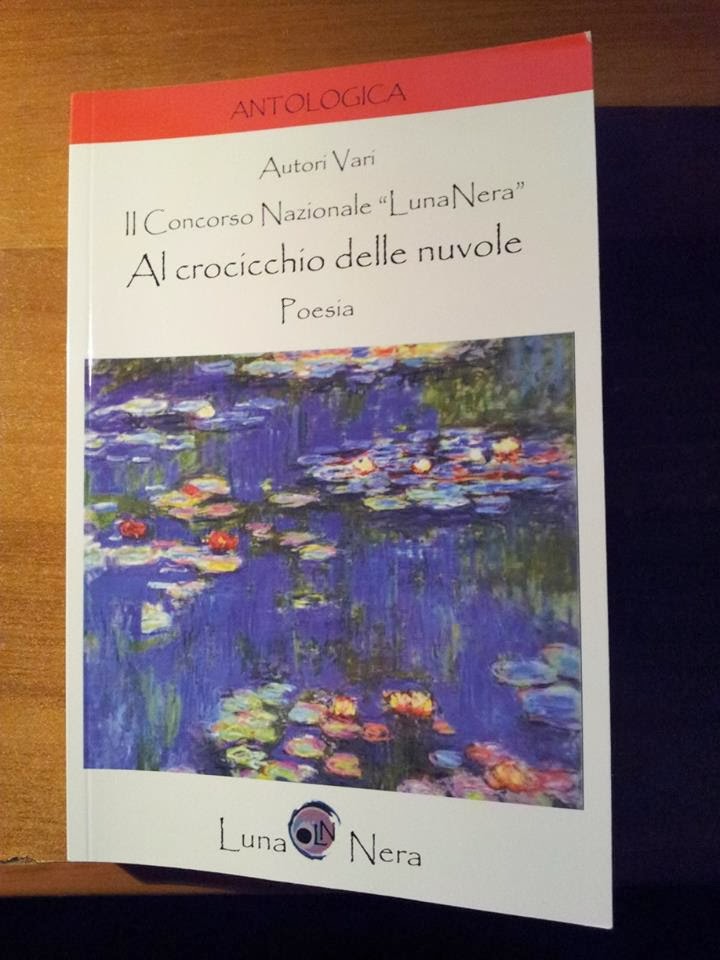
It is printing the book of poems “The crossroads of the Clouds” by Various Authors from The National Competition “Black Moon” – www.associazionelunanera.it with some of my poems.

Img - Jpg

And once again appeared to enjoy the wonder of everyone: writers and newbies. All together they offered a choral work. And this was much more than the sum of the parts.

And for this purpose, I propose for the event one of the three poems that I have published in the book: 

Heartbeat of Love – Lino Milita

I played
and I did not think
to rejoice, involving
the lazy heart of wings,
landing
into the abyss of the gift
Moving in love,
with emotions
emerging, offsetting
embrace the vague,
recognizing
Now that I already loved,
and not I wandered.

*10 Special Guest: Al Crocicchio delle nuvole. La somma è più delle parti

18 novembre 2013 

È uscito il Volume di Poesia “Al crocicchio delle nuvole” di Autori Vari da Il Concorso Nazionale “Luna Nera” – www.associazionelunanera.it con alcune mie poesie.

Img - Jpg

E ancora una volta è apparsa la meraviglia di gioire di ognuno: scrittori già in opera, neofiti e professionisti per attività collaterali a quelle dello scrivere. Tutti assieme nell’offrire un lavoro corale. E la somma fu molto di più delle parti

E all’uopo propongo per l’evento una delle tre che ho pubblicato nel libro:

Battito d’amore

Giocavo
e non credevo
di gioire, coinvolgendo
il pigro cuore d’ali,
atterrando
nell’abissale dono del
moto innamorato,
con emozioni
emergenti, elidendo
l’abbracciar vago,
riconoscendo
ora che già amavo,
e non erravo.


The beginning of the tale

November 3, 2013

Here is the moment in which we begin to write relishing the idea that it is something exclusive. We imagine, however, that in one dimension the next someone to read the whole thing and alive. The initial moment to write a verse or a line of a likely novel, compelling, reappeared countless times.

Attempts and fantasies that they summon the immediate birth of the poem, multiply preparatory rites in making this first act that we have seen as safe, immediate and spontaneous. Some write preparing sheets, pens, dictionaries, or sitting at the computer, others in the most unthinkable during the daily chores.

 Img-Jpg

Massimo Troisi and Philippe Noiret, in the film “Il Postino”

The beginning: we imagine stories and verses of poetry. We are looking for places and get closer to the great classical writers, to be immediately petrified. The imagination runs in formulating plots and stories that quickly intersect with slices of our lives, most of the time lying and continually varying scenarios, believing it to have occurred. Or more simply with stubborn will, we want to create a new world. Then comes the block after two lines, or write us with hypnotic casting a line after the other as if we were talking to an imaginary audience.

We tell ourselves a story, with a beginning, a point of conflict, doubt, and we imagine an end to any recovery, or we try to follow the words by queuing a period after another, listening to the sound correlative. If we lose the magic of writing, our body again becomes heavy and it is void of words, as if the texture we were creating was evaporated; so we try to chase wrecks of thought that disappear like steam from a window in the winter that we have just breathed. It all comes back in the silence …. but we do not give up and even if we do not succeed in intent, we still dream with open eyes to start over.

What are you doing for the beginning? What are the rituals that you use in telling the tale of your experience (false or likely)? Which time and place you are looking to start?

L’inizio … della storia…

3 novembre 2013 

Ecco l’attimo con il quale noi iniziamo a scrivere pregustando l’idea che è qualcosa di esclusivo, immaginando comunque che in una dimensione prossima qualcuno legga il tutto e lo viva. Il momento iniziale per scrivere un verso o una riga di un probabile romanzo, irresistibile, riappare innumerevoli volte.

Tentativi e fantasie che intimano la nascita immediata del componimento, moltiplicano riti preparatori nel realizzare questo primo atto visto come sicuro, immediato e spontaneo. Alcuni scrivono preparando fogli, penne, dizionari o sedendosi davanti al computer, altri ancora nei posti più impensabili durante le faccende quotidiane.

Img _ jpg

Massimo Troisi e Philippe Noiret, nel film “Il Postino”

L’inizio: immaginiamo storie e versi di poesie. Ricerchiamo luoghi classici e ci avviciniamo ai grandi scrittori, per esserne subito impietriti. Corre la fantasia nel formulare intrecci e storie che velocemente s’intersecano con spicchi delle nostre vite, il più delle volte mentendo e variando continuamente gli scenari, credendo che siano accaduti. O più semplicemente con pervicace volontà vogliamo creare un mondo nuovo. Arriva il blocco dopo due righe, oppure scriviamo con ipnotico getto una riga dopo l’altra come se parlassimo a un pubblico immaginario. Raccontiamo a noi stessi una storia, con un inizio, un punto di conflitto, un dubbio e immaginiamo la fine a ogni ripresa, oppure cerchiamo di seguire le parole accodando un termine dietro l’arto ascoltando il correlativo sonoro. Se perdiamo l’incanto di scrivere, il nostro corpo ridiventa pesante svuotandosi di parole, come se la trama che stavamo generando fosse evaporata e cerchiamo di inseguire relitti di pensiero che spariscono come vapore da una finestra in inverno cui abbiamo appena alitato. E tutto ritorna nel silenzio…. ma non demordiamo e anche se non riuscissimo negli intenti, ad occhi aperti sogniamo di ricominciare.

Che fate voi per iniziare? Quali sono i riti nel raccontare la storia del vostro vissuto (falso o verosimile non ha importanza)? O ancora, quale luogo e tempo state cercando per iniziare?

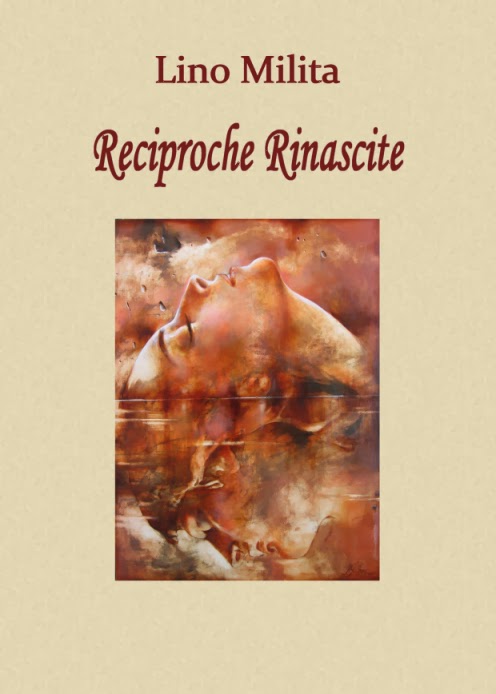
It is printing the book “Mutual rebirths”

October 13, 2013 
Img - Jpg
Come rinascere da adulti senza arrecare dolore


After my first publication, the book of poems with images “Suspended Dreams”,  I come to another appointment with myself, to offer readers a new share of moods and events of everyday life, which I consider common each of us: “Mutual rebirths.”

The offer is discreet, because every revival that does not deny the past that involves peers. My guess is that any revival is always unanimous, and thus it may represent a genuine and radical transformation.

This collection of 50 poems that are accompanied by pictures, some in color, intended to stimulate and arouse in the reader thinking about the world, about human relationships and about the wonders that each human being carries with him.

The book in paperback version you can find it on Youcanprint: HERE and HERE on IBS

and in ebook format:

Amazon – mobi format: HERE
Feltrinelli – epub format: HERE
Ultima books – epub – mobi: HERE

In stampa il libro “Reciproche rinascite”

13 ottobre 2013 
Img - Jpg
Come rinascere da adulti senza arrecare dolore


Dopo la mia prima pubblicazione, il libro di poesie con immagini Sogni Sospesi, giungo a un altro appuntamento con me stesso, per offrire ai lettori una nuova condivisione di stati d’animo ed eventi del vivere quotidiano, che ritengo comuni per ognuno di noi: “Reciproche rinascite”.

L’offerta è discreta, perché ogni rinascita che non neghi il passato comporta e aspetta quella dei pari. La mia ipotesi è che ogni rinascita sia sempre corale, e in tal modo essa possa rappresentare un’effettiva e radicale trasformazione.

Questa raccolta di 50 poesie accompagnate da immagini, di cui alcune a colori, intende suscitare nel lettore riflessioni e stimoli sul mondo, sui rapporti umani e sulle meraviglie che ciascun essere vivente porta con sé.

Il libro in versione brossura lo puoi trovare su Youcanprint: QUI e su IBS QUI

e in formato ebook:

Amazon – formato mobi: QUI
Feltrinelli – formato epub: QUI
Ultima books – formato epub – mobi: QUI

# 19 Contamination: Seamus Heaney: intention, intuition and casualness

September 17, 2013

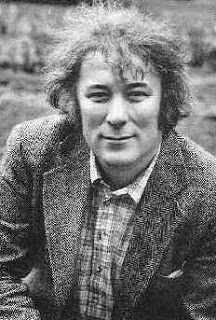
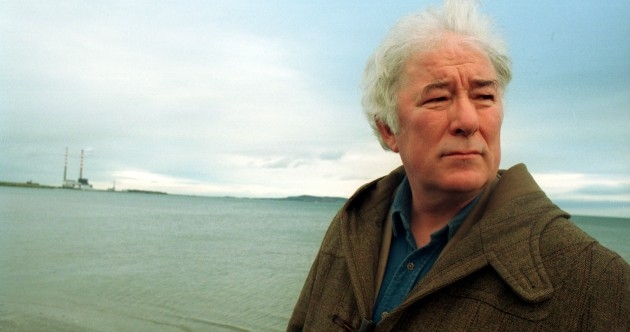
Séamus Heaney (Castledawson, April 13, 1939 – Dublin, August 30, 2013) was an Irish poet, Nobel Prize for Literature in 1995, the highest representative of the contemporary Irish poetry renaissance. Seamus spokes with everyone looking at them in the eye in academic conferences and pubs; of sacred things and everyday life.

Img - Jpg

Recently, it has returned to the fore for the departure, but it’s good enough mourning: it expresses the memory, because it is a fact and an ancestral rite that it is before the current religions. Seamus is an example of the care, study, perseverance and certainly not just lazy intuition and improvisation. He has experienced first hand the combination of theory and practice, because the activities of poetry immediately imply the notions of produce, make, manufacture, design, touch the ground.


Digging BY SEAMUS HEANEY

Between my finger and my thumb
The squat pen rests; snug as a gun.

Under my window, a clean rasping sound
When the spade sinks into gravelly ground:
My father, digging. I look down

Till his straining rump among the flowerbeds
Bends low, comes up twenty years away
Stooping in rhythm through potato drills
Where he was digging.

The coarse boot nestled on the lug, the shaft
Against the inside knee was levered firmly.
He rooted out tall tops, buried the bright edge deep
To scatter new potatoes that we picked,
Loving their cool hardness in our hands.

By God, the old man could handle a spade.
Just like his old man.

My grandfather cut more turf in a day
Than any other man on Toner’s bog.
Once I carried him milk in a bottle
Corked sloppily with paper. He straightened up
To drink it, then fell to right away
Nicking and slicing neatly, heaving sods
Over his shoulder, going down and down
For the good turf. Digging.

The cold smell of potato mould, the squelch and slap
Of soggy peat, the curt cuts of an edge
Through living roots awaken in my head.
But I’ve no spade to follow men like them.

Between my finger and my thumb
The squat pen rests.
I’ll dig with it. 

The poetry is not confined to optics of the individual and it comes from the popular roots also made of musical tones, which are derived from folk songs. The poet received a mandate by the community of origin and belonging, while seeking a contact with European literature. The memory comes from the oral tradition and it is the source that allows the poet to grasp the totality of the real objects through childhood and rural labor. The poet captures the sense of “we”, when he declares in practice an ethical commitment, especially the Irish.

Seamus feels the issue of Northern Ireland among their acquaintances and family. In the seventies he also wrote about Bobby Sands (Robert Gerard Sands – Belfast, March 9, 1954 – Long Kesh, May 5, 1981, was a Northern Irish politician and activist, volunteer of the Provisional Irish Republican Army. He was elected a member of the British parliament while he was detained in the Maze prison at Long Kesh, where he died May 5, 1981 as a result of a hunger strike led to the bitter end as a form of protest against the regime prison where detainees were subjected Republicans). Seamus was able to distinguish the role of political the activist and even more by the poet, in fact he left Northern Ireland in 1972 and settled in Wicklow, Republic of Ireland.

Img - Jpg

In an interview, Seamus discusses his history as a poet and as he felt that after having published three books, not before. And in particular, how the poem should find its size between these two opposites: the constantly ask the question “what is the task of poetry?” And at the same time he expressed the human condition – private. The Irish question was transfigured him in the condition of every people. Finally, just because the memory draws from their land, the poet perceives the individual traits of a global vision of reality having in mind the intention of sharing it with their own community, without which he follows a priori rules and formal requirements.

He is the poet who with the intention, the word and the sound, exposes the original relationship between the self and its stand in the place of all peoples.

Le mie sono solo risposte a un tuo continuo richiamo…